Classification of Wireless Modules
Leave a message
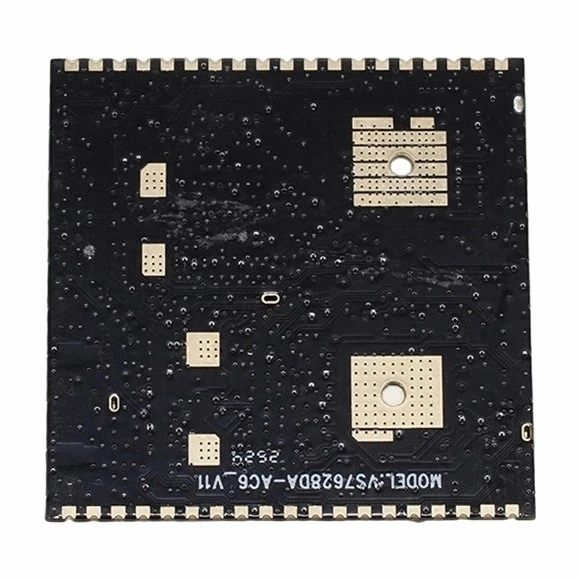
Wireless modules commonly found on the market fall into three categories: ASK superheterodyne modules (primarily used for simple remote control and data transmission); wireless transceiver modules (mainly used for microcontroller-controlled data transmission, typically employing FSK or GFSK modulation); and wireless data transmission modules (designed for direct serial port data exchange, offering ease of use).
Based on communication technology standards, wireless modules are primarily categorized into cellular communication modules (such as 5G, 4G LTE, and LPWA modules-notably NB-IoT) and short-range communication modules (such as Wi-Fi, Bluetooth, and ZigBee). Cellular modules drive current market growth, while Wi-Fi and Bluetooth modules are widely adopted by IoT developers.
In terms of operating frequency, these modules cover a broad spectrum ranging from 230 MHz to 2.4 GHz, with 230 MHz, 315 MHz, 433 MHz, and 2.4 GHz being the most common frequency bands.